
You Can Change, You Just Need to Know How
Let’s be so for real right now. You don’t truly believe you need to change. That’s the main problem. To change, you need to be aware, as the first step of changing anything is awareness. Being aware isn’t enough, though. To take change to the next level, you need to analyze the why. Your habits don’t change unless the heart changes, and your heart only changes when you have a strong enough why. Let’s have just one convo about how to analyze your heart posture, develop healthier habits, and track your progress.
You Don’t Know How to Change Your Heart Posture

What is heart posture?
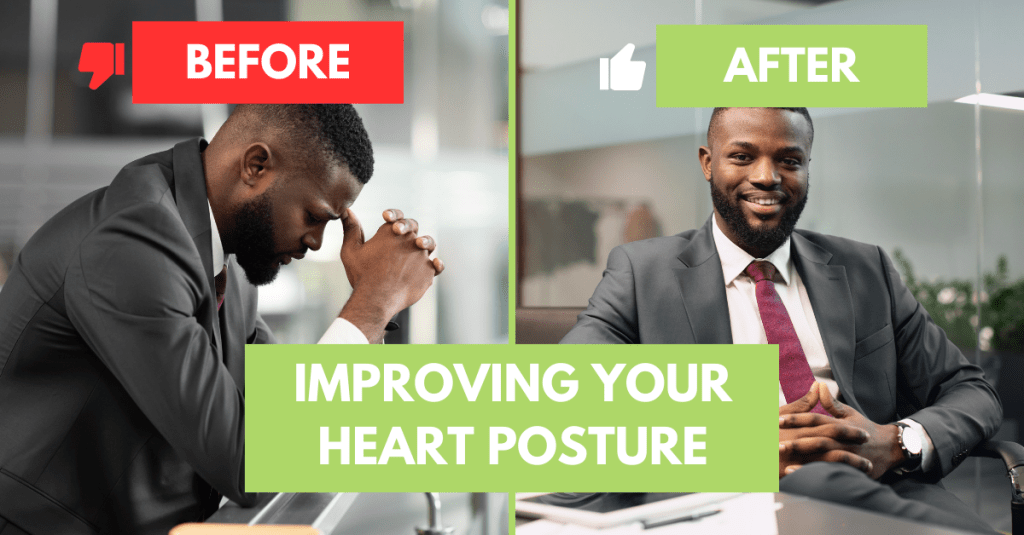
Before we start discussing how to analyze your heart posture, we need to know what heart posture means. I’m not talking about the physical placement of your heart but rather the metaphorical placement. Heart posture is a metaphorical phrase used to refer to your attitude and intentions that influence how you engage with yourself, others, and God.
It is no secret that our heart often overrides our brains. We are emotional creatures who have the propensity to lead with our feelings. Your heart posture plays a huge role in your decision-making, whether you acknowledge it or not. While women are frequently touted to be the more emotional gender, we can see plenty of examples in politics, pop culture, and prison where men are just as controlled by their emotions. Fatal Attraction, anyone?
Additionally, we see the impact of being controlled by our hearts when we look at the substance abuse rates in the United States. People typically abuse substances when they want to escape the mental, emotional pain they experience. This issue is a matter of their heart posture. We have to start being aware of how our emotions influence our lives. Let’s take it to the next level and discuss ways to analyze heart posture.
How to examine your heart posture
There are several ways to examine your heart posture. While there are technically no methods greater than the other because different methods work better for different people, you will see me frequently reference journaling as collectively one of the most impactful ways of self-awareness. Furthermore, journaling allows to the ability to express yourself in a nonjudgmental space. Sometimes, you’re just not ready to share the truth with others. I get it. Telling the truth can be intimidating if it leads to results you don’t want. Lying to yourself and others will continue to undermine the quality of life you want to experience.
When journaling, it is critical that you allow yourself to answer freely. Don’t judge yourself for what comes to mind first. The beauty in journaling is that no one has to see what you write. While I’d prefer for you to keep your journal writings, you can rip them up, throw them out, or safely burn them. I am asking you to be vulnerable with yourself, which isn’t an easy task at all. You are capable of freeing yourself from what burdens your mind. That said, let’s look into journal prompts to guide your mind to freedom. We’re digging in deep.
5 Journal Questions to Examine Your Heart Posture
- What truth(s) am I not ready to reveal to myself and others?
- What feels scary about sharing my truth(s)?
- What are the possible outcomes of sharing the truth? The good, the best, the bad, and the ugly.
- If I gave myself full permission to be honest, how would my relationships shift?
- How would it feel in my body to live fully aligned with my truth?
By allowing your mind to be guided by these prompts, you feel yourself embracing your truth. You’ve not only become aware, but you’ve also analyzed your heart posture, too. This analysis allows you to create healthier habits. If you feel journaling is not the method for you, here are a couple more methods to try that are rooted in self-observation.
7 Non-journaling Ways to Examine Your Heart Posture
- Body Language Check
- Notice how your body reacts in different interactions — are your shoulders tense, arms crossed, or do you lean in and soften? The body often mirrors the heart’s stance.
- Tone of Voice Awareness
- Pay attention to how you speak, not just what you say. Does your tone carry warmth, sharpness, defensiveness, or openness?
- Response Under Stress
- Observe your first instinct when under pressure: do you shut down, lash out, or stay present? That knee-jerk response reveals your posture.
- Relational Feedback
- Ask trusted people how they feel in your presence — safe, judged, heard, or dismissed. Sometimes others see our posture more clearly than we do.
- Conflict Style
- Track how you handle disagreements: do you seek to win, avoid, compromise, or connect? Each approach is a mirror of your heart’s stance.
- Capacity for Empathy
- Notice how easily you can sit with someone else’s pain without rushing to fix, dismiss, or escape it.
- Daily Interactions
- Pay attention to how you treat service workers, strangers, or people with no power over you — small interactions often reveal the truest posture.
Your heart posture is crucial to decision-making. Now that you know how to analyze your heart posture, you have no excuse for not doing better. You know better.
You Have Unhealthy Heart Posture Habits, Here’s How to Improve

Analyzing your heart posture is a practice. It is not a one-and-done type of activity. This practice is a start to emotional regulation routines you can adapt into your life. Emotional regulation practices and routine can improve the quality of your life significantly.
Emotional Regulation Routines:
- Learn to Identify Your Emotions
- Use an Emotion Wheel
- Use “I feel” statements instead of “I am” statements when expressing emotions
- Example: “I feel frustrated” instead of “I am frustrated.”
- Mindfulness Check-ins
- AppleWatch Mindfulness App
- 4-4-4 Breathing Technique
- Brain Breaks
- Reflecting on Previous Hard Times You Made it Through
- Exercise! Exercise! Exercise! ← I can’t stress this practice enough.
The Hard Truth About Regulating Your Heart Posture
People and situations will trigger you for the rest of you life. You are responsible for how you handle your emotions after your triggered. There are no excuses. The practices listed above is not a comprehensive list of how you can manage your emotions, but it is a start. By nature, you will learn which techniques work better for you, but it will be hard to identify and manage your emotions in the beginning. Give yourself grace considering these practices are new to you.
You Have to Be Intentional About Tracking Your Progress
“You can’t really know where you are going until you know where you have been” ~ Maya Angelou
I interpret Angelou’s words in this situation as you can’t know how much progress you’re making if you’re not keeping track of your previous checkpoints. Not tracking your progress is like the fairytale of Hansel and Gretel where they used breadcrumbs to track where they’ve been but the birds ate the breadcrumbs and the siblings became lost. You can avoid becoming lost when you’re using tracking techniques like journaling, garnering feedback from others, and noticing when you respond to a situation better than you would in the past. Tracking your progress is crucial to your personal development. Don’t skip this very important part.
Elevating Your Heart Posture Makes Change Possible
The one constant thing in our life is change. From day-to-day, year-to-year, decade-to-decade, you will experience several opportunities to change, but will you embrace those opportunities? Survival of the fittest is a phrase we hear when discussing our adaptability as creatures. You have to be able to adapt with the times or you will be left behind. The quality of your life depends on your ability to embrace necessary change. You are more than capable and I hope this article helped you lean a little bit closer to improving your life.

Veronica Speaks is a speaker, multidisciplinary artist, and psychology student who speaks about holistic health, how it helps to evolve your inner mind, and increase the peace in your life. She is the writer and founder of Inner Convo Evolved.




 Veronica Speaks
Leave a comment